Nursing pads
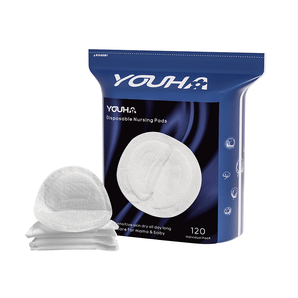
Do you suffer from leaking breasts during pregnancy or breastfeeding? With soft and absorbent breast pads, you protect your bra and clothing from leaking breast milk. Youha breast pads are comfortable to wear and available in packs of 60 or 120. This way, you always have a clean breast pad on hand when you need it.
Breast Pads for Leaking Breasts
Leaking breasts are common during pregnancy and breastfeeding. For example, your breasts may leak milk when your baby nurses on the other breast, when you have a let-down reflex, or between feedings. Some women may also notice small amounts of colostrum leaking from their breasts during the last phase of pregnancy.
Breast pads, also known as nursing pads, are worn in the bra and absorb leaking breast milk. This prevents the milk from directly reaching your bra or clothing, keeping you more comfortable and drier throughout the day.
Youha's soft breast pads are designed for daily use during the breastfeeding period. They are available in packs of 60 and 120, so you can choose the quantity that best suits your needs.
What are breast pads?
A breast pad is a thin and absorbent pad that you wear inside your bra. The pad catches breast milk that leaks from the nipple and helps prevent this milk from getting on your clothes.
Especially in the first weeks after birth, breasts can leak regularly. Your milk production is still adjusting to your baby's needs. Leaky breasts can also continue to occur later in the breastfeeding period.
How much milk you lose varies greatly per person. Some mothers barely suffer from leakage, while others need a clean breast pad several times a day.
When do you use breast pads?
You can use breast pads as soon as you notice fluid or breast milk leaking from your breasts. This can happen at different times.
- During pregnancy: some women experience leaking breasts in the last phase of their pregnancy.
- After childbirth: when milk production starts, your breasts can become fuller and leak milk more easily.
- Between feedings: full breasts can spontaneously lose a small amount of breast milk.
- During feeding: when your baby nurses on one breast, milk can also leak from the other breast due to the let-down reflex.
- At night: during longer periods between feedings, breasts can become fuller and start to leak.
You can wear breast pads both during the day and at night. The most important thing is to regularly replace a used or damp pad with a clean one.
Leaking breasts during pregnancy
Searching for information about leaking breasts during pregnancy is perfectly understandable when you first see fluid coming from your nipples. During pregnancy, your body is already preparing for breastfeeding.
The first breast milk, colostrum, is already produced during pregnancy. For some women, a small amount of this occasionally leaks from the breast. Other women experience no leakage at all throughout their pregnancy. Both situations can occur.
If your breasts leak during pregnancy, a soft breast pad can help absorb the fluid and keep your bra and clothing dry.
The benefits of breast pads
A good breast pad is primarily intended to easily and comfortably catch leaking breast milk. Breast pads can offer several benefits during the breastfeeding period:
- Protection for your clothing: breast milk is collected by the pad before it reaches your bra or outer clothing.
- Absorbent: the different layers of the breast pad are designed to quickly absorb leaked breast milk.
- Soft on the breast: a soft inner layer feels comfortable against the sensitive skin around the nipple.
- Discreet to wear: the thin design easily fits into a nursing bra or regular bra.
- Hygienic: a disposable breast pad can be easily replaced with a clean one after use.
- Convenient for on the go: individual breast pads are easy to carry in your bag or changing bag.
How often should you change a breast pad?
How often you need to change a breast pad depends on how much milk you lose. Check regularly throughout the day if the pad is damp and replace it when necessary.
Wearing a wet breast pad against the skin for an extended period is not pleasant. The skin around the nipple should preferably remain as clean and dry as possible. Do you suffer a lot from leaking breasts? Then it might be useful to always carry some extra breast pads when you leave the house.
60 or 120 breast pads: which pack do you choose?
At Youha, you can choose between packs with 60 breast pads and 120 breast pads. Which pack is most suitable mainly depends on how often you use the pads.
Do you only use breast pads occasionally, or do you want to first find out how often you need them? Then a pack of 60 pieces might be sufficient. If you experience daily leaking breasts and replace the breast pads several times a day, then a pack of 120 pieces is more practical.
It can also be useful to keep a supply in different places, for example at home, in your handbag, diaper bag, or at work.
Breast pads or milk collection shells?
Both breast pads and milk collection shells can be used for leaking breasts, but they serve different purposes. A breast pad absorbs leaked breast milk, and the used pad is then replaced. A milk collection shell or milk collector collects the breast milk in a reservoir.
Which solution is most comfortable therefore depends on what you want to do with the leaked milk. If you primarily want to keep your clothes dry and are looking for a simple solution for daily use, breast pads are practical. If you actually want to collect breast milk, a milk collection shell or milk collector might be a better fit for your situation.
What should you consider when choosing breast pads?
Since a breast pad is worn directly against the breast for a longer period, comfort and absorbency are important properties.
When choosing breast pads, pay attention to:
- the softness of the material that touches the skin;
- the absorbency;
- the thickness of the pad;
- how well the breast pad stays in place in the bra;
- whether the pad can be worn comfortably under clothing;
- how often you need a new pad during the day.
Especially when your nipples are sensitive from breastfeeding, a soft inner layer can feel pleasant.
What do experts say about leaking breasts?
Leaking breasts are a common phenomenon during pregnancy and breastfeeding and can particularly occur when milk production starts or when a let-down reflex is triggered.
How much your breasts leak does not automatically indicate the amount of breast milk you produce. One mother leaks a lot of milk and another hardly any, while both can produce enough milk for their baby.
When using breast pads, it is especially important to pay attention to comfort and hygiene. Regularly replace a wet breast pad and ensure that the skin around the breast and nipple remains as clean and dry as possible.
In addition to leakage, do you suffer from persistent pain, damaged nipples, redness, or other complaints while feeding or pumping? Then it may be wise to seek advice from a lactation consultant, midwife, or other healthcare professional.
Youha Breast Pads
The Youha breast pads are designed to comfortably collect leaking breast milk during pregnancy and breastfeeding. The soft material feels pleasant against the breast, while the absorbent layers help prevent leaked breast milk from getting on your bra or clothing.
You can choose between a pack of 60 pieces or a larger pack of 120 pieces. This allows you to choose the quantity that suits how often you use breast pads.
Breast pads are also part of a wider range of Youha products for breast care, pumping, and collecting and storing breast milk.
Frequently asked questions about breast pads
We answer the most frequently asked questions about breast pads, nursing pads, and leaking breasts.
What are breast pads used for?
Breast pads are worn in the bra to collect leaking breast milk. The breast pad absorbs the fluid and helps prevent the breast milk from getting into your bra or clothing.
When should you use breast pads?
You can use breast pads as soon as you experience leaking breasts. This can start during pregnancy, but is especially common when milk production starts after birth. You can wear the pads both during the day and at night.
How often should you change a breast pad?
Replace a breast pad when it is damp or saturated. How often this is necessary varies per person and depends on how much milk your breasts leak. Therefore, check the pads regularly throughout the day.
Are leaking breasts during pregnancy normal?
For some women, the breasts may leak small amounts of colostrum during pregnancy. Other women do not experience this at all. Whether or not breasts leak does not automatically indicate how much breast milk you will produce after birth.
What is the difference between breast pads and nursing pads?
In practice, the terms breast pads and nursing pads are often used interchangeably for the same product: an absorbent pad worn in the bra to catch leaking breast milk.
Can I wear breast pads at night?
Yes, breast pads can also be worn at night. Especially when there is a longer period between feedings at night, the breasts can become fuller and start to leak milk. Replace a damp pad as soon as necessary.
What is better: breast pads or milk collection shells?
That depends on what you want. A breast pad absorbs leaked breast milk and is primarily intended to keep your bra and clothes dry. A milk collection shell or milk collector collects the milk in a reservoir. If you want to collect leaked milk, a milk collection shell may be more practical.
How many breast pads do I need?
This varies per person. If you leak little milk, you may only need a few breast pads per day. With heavier leakage, the pads may need to be replaced more often. Youha therefore offers packs of 60 and 120 pieces.
Why Youha?
Youha has been active for more than 15 years in the field of breastfeeding, pumping, and mother and baby products. Based on this experience, we develop and select products that match the different phases of pregnancy, breastfeeding, and pumping.
In addition to breast pads, Youha offers breast pumps, milk collection shells, milk collectors, and products for breast care and storing breast milk. We collaborate with lactation consultants, midwives, and other healthcare professionals and believe it is important that you not only choose a product but also receive clear information and support for its use.

 Breast pads - 60 or 120 pieces From €12,95 /